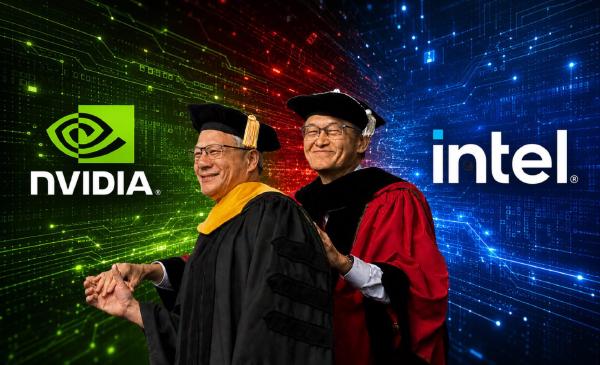
In a significant moment for both companies, Intel CEO Lip-Bu Tan expressed his congratulations to NVIDIA’s CEO Jensen Huang on receiving an Honorary Doctorate in Science and Technology from Carnegie Mellon University. This prestigious recognition was bestowed upon Huang during the university’s 2026 Commencement ceremony, where he delivered the keynote address. As first reported by Wccftech, Tan took the opportunity to not only celebrate Huang’s achievements but also to announce that Intel and NVIDIA are collaborating on new and innovative products.
In a recent podcast with Dwarkesh Patel, NVIDIA CEO Jensen Huang provided insights into the company’s strategic direction and the broader landscape of AI technology. Huang asserted that even in the absence of artificial intelligence, NVIDIA’s growth trajectory would have remained robust due to its foundational strengths in accelerated computing.
Nvidia’s recent unveiling of DLSS 5 has sparked significant debate among gamers and developers alike, with many expressing concerns over the potential impact on game aesthetics. During a Q&A session at the GPU Technology Conference (GTC) 2026, CEO Jensen Huang took the opportunity to address this backlash directly. As first reported by IGN, Huang’s response to the criticism was straightforward, asserting, “first of all, they’re completely wrong.”
NVIDIA, a leading force in the tech world, is projecting a staggering growth in compute revenue, estimating it could reach $1 trillion within the next two years. This forecast reflects a significant shift in the artificial intelligence (AI) landscape, transitioning from training models to inference, which is driving an unprecedented surge in compute demand.