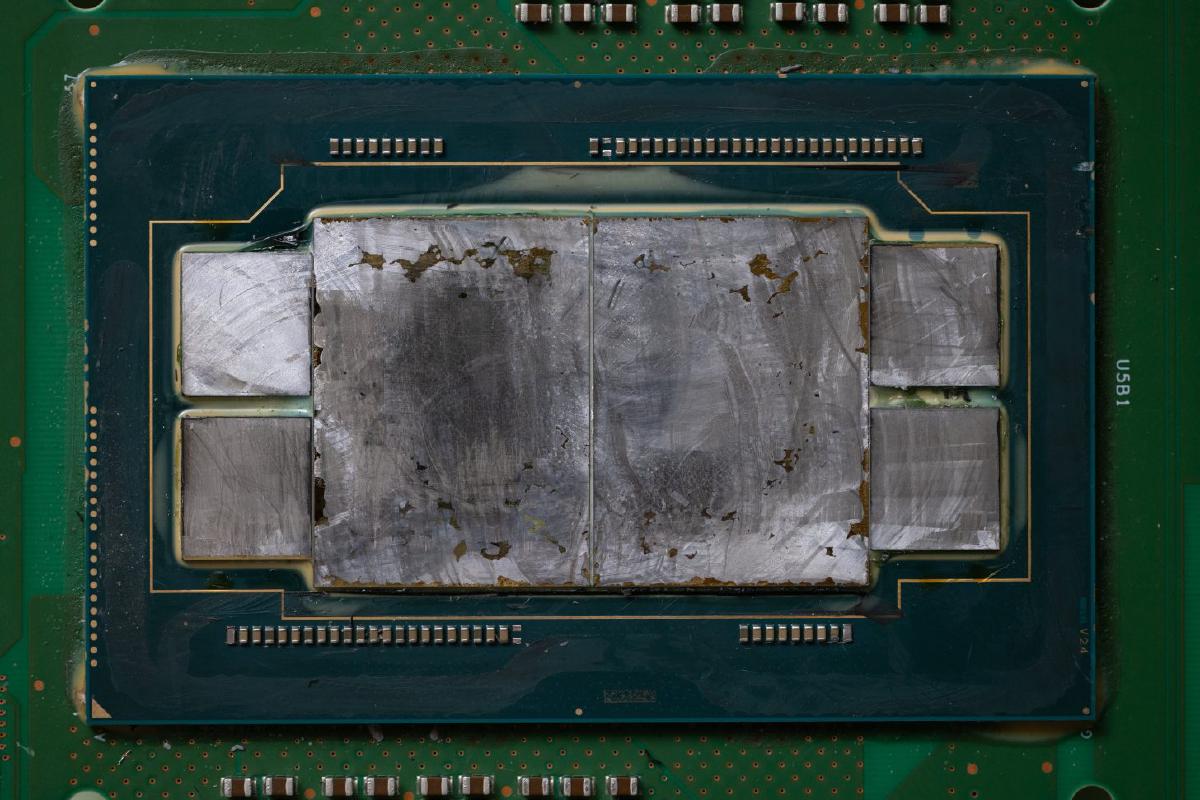
Intel’s Arctic Sound 2T GPU, a product that was previously shelved back in 2021, has re-emerged following an unexpected mix-up with a user’s order. As first reported by Wccftech, a customer who intended to purchase Intel’s Ponte Vecchio GPU received a sample of the long-canceled Arctic Sound 2T instead. This incident sheds light on a product that many industry insiders believed was lost to history.
Originally introduced in 2018, the Arctic Sound project aimed to deliver a versatile GPU lineup designed for gaming, workstation, and data center applications. Built on the Xe-HP architecture, Arctic Sound was intended to complement Intel’s ambitious graphical endeavors alongside the more prominent Ponte Vecchio GPU, which garnered attention for its innovative multi-tile and multi-package configuration.
The Arctic Sound 2T model features dual tiles and incorporates quad HBM2E memory, indicating a robust focus on high bandwidth and memory performance, which are critical for data-intensive applications. While the specifics of its architecture remain largely speculative, the design implies a significant commitment to performance and versatility.
This recent resurfacing of Arctic Sound has sparked discussions within tech circles about Intel’s GPU roadmap and the potential technologies that could have been integrated into future products. Graphics processing units have seen rapid advancements, and the dual-tile configuration of Arctic Sound suggests that Intel was keen on exploring innovative layouts that could enhance efficiency and performance scalability.
Intel’s graphics division has had its share of ups and downs, with the Xe architecture playing a pivotal role in the company’s strategic shift toward competing with established GPU giants Nvidia and AMD. The Ponte Vecchio GPU itself is a testament to Intel’s ambitions, aiming to cater to high-performance computing (HPC) environments. It is noteworthy that the Arctic Sound 2T’s specifications align with a trend in the industry where memory bandwidth and tile-based designs become increasingly relevant.
Despite its cancellation, the Arctic Sound serves as a reminder of the potential directions Intel could have taken in its GPU development. The shift away from Arctic Sound signifies Intel’s pivot towards other strategies that align more closely with market demands. The unveiling of the Arctic Sound sample might reignite interest in Intel’s past projects and highlight the ongoing challenges and transitions within its graphics division.
Intel’s graphics team has been working diligently to establish itself in a competitive landscape, continuously pushing boundaries to innovate and deliver products that can stand toe-to-toe with Nvidia and AMD offerings. The resurfacing of the Arctic Sound 2T GPU is more than a mere curiosity; it reflects the ongoing evolution and resilience of Intel’s efforts within the graphics processing sector and the ever-changing dynamics of GPU technology.
As Intel continues to navigate its path in the GPU market, the Arctic Sound story serves as a chapter of both ambition and caution, illustrating the complexities of technology development and the decisions that shape a company’s future.
Image credit: Wccftech
This article was generated with AI assistance and reviewed for accuracy.